Fragrance · 13 September 2026
Different types of perfumes, scents & fragrances – Perfume Scents
Fragrance is a personal business. The same scent that feels like a signature on one person can smell entirely different on another, and the sheer volume of choice on offer does not make the decision any easier. Understan
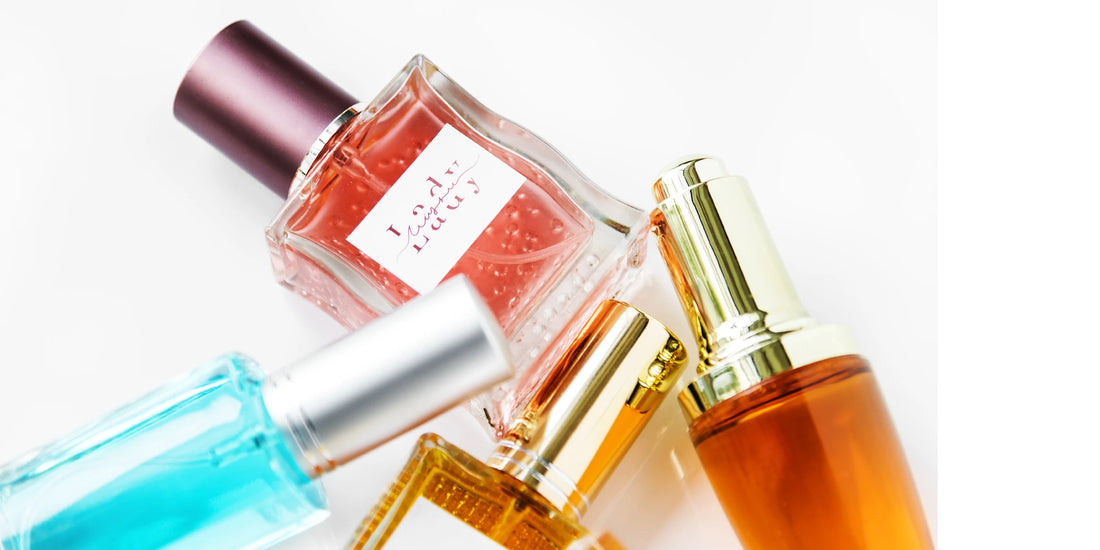
Fragrance is a personal business. The same scent that feels like a signature on one person can smell entirely different on another, and the sheer volume of choice on offer does not make the decision any easier. Understanding how perfumes are classified — both by concentration and by scent family — is the simplest way to narrow the field.
Concentration: how strong do you want it?
The terms you see on bottles refer to how much fragrance oil is dissolved in the alcohol or carrier. The higher the concentration, the longer the scent tends to last and the more it costs.
Eau de Parfum (EDP) is the most widely sold category, typically holding 15–20% fragrance oils. It generally lasts up to eight hours, which makes it a common choice for evenings and special occasions.
Eau de Toilette (EDT) is a lighter proposition, containing around 5–15% fragrance oils and lasting up to four hours. It suits daytime wear and those who prefer something understated.
Eau de Cologne (EDC) carries just 2–5% fragrance oils and tends to fade within about two hours. It is a refreshing, light option for everyday use.
Perfume oil sits at the opposite end of the scale, with concentrations of up to 30% and a wear time of up to 24 hours. Those with sensitive skin, or anyone who prefers a formula without a high alcohol content, often gravitate towards it.
Solid perfume is wax-based rather than liquid. It applies directly to the skin, lasts around four hours, and is a practical choice for travel since it will not leak.
Scent families: what do you want it to smell like?
Beyond strength, perfumes are grouped by the ingredients at their heart.
Floral fragrances draw on rose, jasmine and lavender, among others. They remain the most popular category and tend towards a romantic, traditionally feminine character.
Oriental scents are warm and spicy, built around notes such as vanilla, musk and amber. They are bold and exotic rather than subtle.
Woody perfumes use sandalwood, cedarwood and patchouli, giving an earthy, natural quality.
Fruity fragrances feature apple, peach and citrus notes, and tend to feel fresh and vibrant.
Finding your own
Choosing a perfume is easier once you know what you are looking at. Decide first how long you want the scent to last and how much presence you want it to have, then work out which family appeals. Sampling on your own skin is the only reliable test — a fragrance will develop differently on everyone — but knowing the categories gives you a sensible place to start.